
Bike details
Overview
Key information split into simple groups.
Bike summary
-
 Category
 -
 Frame Aluminum
 -
 Wheels 700c
 -
 Groupset Shimano
 -
 Suspension Rigid
 -
 Drivetrain 3 × 8
 -
 Brakes Rim
Parts list
Components
Main components, grouped by system.
Bike components
Frame
Frame
Fuji Altair 1 Compact aluminum with traditional round down tube, Double water bottle mounts
Suspension Fork
Fuji Aluminum custom tapered w/Cro-Moly steerer, 1 1/8"
Drivetrain
Rear Derailleur
Shimano 2200
Front Derailleur
Shimano 2203, 31.8mm for triple
Shift Levers
Shimano 2203 STI shifter/brake, 24-speed
Cassette
SRAM PG-850, 12-26T 8-speed
Crank
Fuji Forged Aluminum Road 30/42/52T Chainring
Bottom Bracket
Sealed Cartridge Bearing ST
Chain
KMC Z-72
Pedals
none
Wheels
Front Hub
Formula Alloy Road, 32H
Rear Hub
Formula Alloy Cassette Road, 8-speed, 32H
Rims
Alex PRD-15 Double Wall Aluminum, 32H 700c clincher
Spokes
14G Stainless Steel
Tires
Kenda K-152, 700 X 25c
Brakes
Brakes
Tektro R-310A Forged AL dual pivot
Brake Levers
none
Cockpit
Stem
Fuji Adjustable Road Aluminum, Removable Clamp
Handlebar
Fuji Alloy Road
Headset
Ritchey LB 1 1/8"
Seat
Saddle
Fuji UltraLite Racing
Seatpost
Fuji Comp Alloy Micro Adjust, 350mm
Fit data
Geometry
Numbers for sizing and ride feel.
| Size | 42cm | 46cm | 50cm | 54cm | 58cm |
|---|---|---|---|---|---|
| Stack Reach Ratio | 1.35 mm | 1.42 mm | 1.5 mm | 1.46 mm | 1.5 mm |
| Bottom Bracket Height | 265 mm | 265 mm | 265 mm | 265 mm | 265 mm |
| Front Center | 584 mm | 587 mm | 584 mm | 595 mm | 619 mm |
| Rake | 45 mm | 45 mm | 45 mm | 45 mm | 45 mm |
| Trail | 69.5 mm | 63.2 mm | 60 mm | 57 mm | 56.9 mm |
| Stack | 515 mm | 538.6 mm | 568.9 mm | 575.5 mm | 610 mm |
| Reach | 382.5 mm | 378.8 mm | 379 mm | 393 mm | 407 mm |
| Top Tube Length | 513 mm | 533 mm | 548 mm | 568 mm | 593 mm |
| Seat Tube Angle | 76 ° | 74.5 ° | 73.5 ° | 73 ° | 73 ° |
| Seat Tube Length | 420 mm | 460 mm | 500 mm | 540 mm | 580 mm |
| Head Tube Angle | 71 ° | 71.5 ° | 72.5 ° | 73 ° | 73 ° |
| Head Tube Length | 105 mm | 126 mm | 156 mm | 161 mm | 197 mm |
| Chainstay Length | 423 mm | 423 mm | 423 mm | 423 mm | 423 mm |
| Wheelbase | 996 mm | 999 mm | 997 mm | 1007 mm | 1032 mm |
| Bottom Bracket Drop | 71 mm | 71 mm | 71 mm | 71 mm | 71 mm |
| Standover Height | 713 mm | 742 mm | 776 mm | 798 mm | 834 mm |
| Wheels | 700 | 700 | 700 | 700 | 700 |
Model Overview
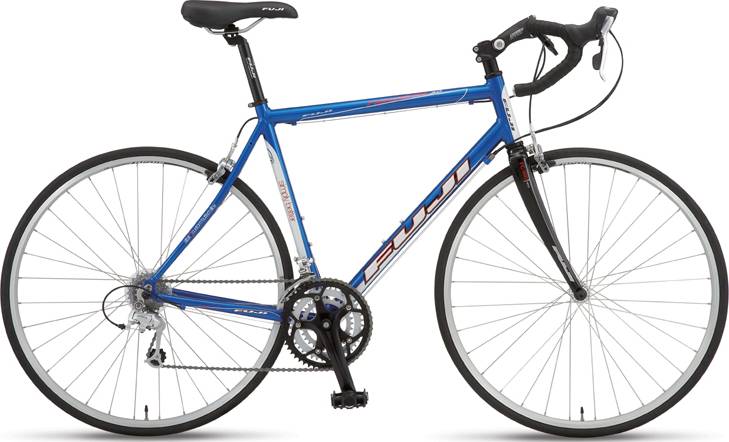
Newest 3.0 (Europe) is part of the Fuji Newest model. Fuji released 46 bikes variations of this model so far. You can easily view all of the Fuji Newest bikes models from 2009, here.
Safety
When cycling always take safety very seriously. Wear a helmet, obey the traffic rules and wear hi-vis clothes. In short, take care of yourself so others can take care of you.
General Road bikes average price
Our math shows that the average cost of a dependable General Road bike is 1915$. However, even though the average price of a General Road bike is lower, you might still be able to get a top-quality bike. As a general rule of thumb, you should always read reviews about the bike and its components before buying it to ensure you don’t pay too much.
General Road bikes average weight
If we make a quick analysis of the average weight of a General Road bike, we get 9 kg (19.84 lbs). A lighter bike will give you some extra advantage when climbing. A heavier bike will have more speed for descents.
Weighing 10.77 kg (23.74 lbs), the Newest 3.0 (Europe) model is much heavier than average. In other words, this model is 19.67% heavier than the average General Road bike.
Newest 3.0 (Europe) components
Fork material
When it comes to the fork, this bike has an aluminum one, which doesn’t add too much extra weight to the bike. However, it is not so stiff as steel or carbon forks are.
Wheels
As for the wheels, Fuji Newest 3.0 (Europe) 2009, has a 700c aluminum model. There is no doubt, that 700c wheels are very popular on all road bike models. However, these wheels don’t perform so well when passing over obstacles.
Brakes
For your safety, it is important to have quality breaks on your bike. Fuji Newest 3.0 (Europe) has Rim brakes installed. Rim brakes are cheaper than hydraulic brakes, and also easier to maintain. However, you could spend a little extra and get a bike that has hydraulic brakes.