
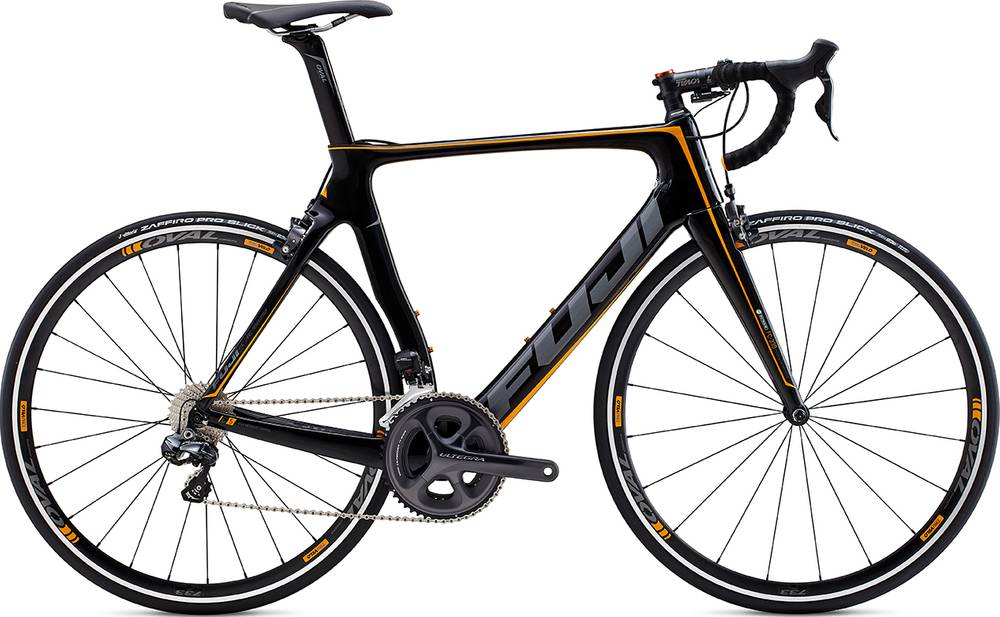
Bike details
Overview
Key information split into simple groups.
Bike summary
-
-
 Frame Carbon
 -
 Wheels 700c
 -
 Groupset Ultegra Di2
 -
 Suspension Rigid
 -
 Drivetrain 2 × 11 Electronic
 -
 Brakes Rim
Parts list
Components
Main components, grouped by system.
Bike components
Frame
Frame
C5 high-modulus carbon, integrated head tube w/ 1 1/2" lower, press fit BB30, double water bottle mounts
Suspension Fork
FC-440 carbon w/ tapered carbon steerer
Drivetrain
Rear Derailleur
Shimano Ultegra Di2, 11-speed
Front Derailleur
Shimano Ultegra Di2, braze-on mount
Shift Levers
Shimano Ultegra Di2, STI , 11-speed
Cassette
Shimano Ultegra, 11-28T, 11-speed
Crank
Shimano Ultegra 6800, 52/36T
Bottom Bracket
Praxis conversion bottom bracket
Chain
KMC X11L, 11-speed
Pedals
N/A
Wheels
Rims
Oval 733 aero alloy clincher, tubeless compatible, 20 / 27h
Tires
Vittoria Zaffiro Pro Slick, 700 x 23, 60tpi, folding
Brakes
Brakes
Shimano Ultegra direct mount
Brake Levers
Shimano Ultegra Di2, STI
Cockpit
Stem
Oval Concepts 313, 6061 3D-forged alloy, 31.8mm, +/- 7°
Handlebar
Oval Concepts 310, butted 6061 alloy, 31.8mm
Headset
FSA, 1 1/8" upper - 1 1/2" lower, integrated
Seat
Saddle
Oval Concepts R500 w/ chromoly hollow rails
Seatpost
Transonic aero carbon, 300mm (46-52cm), 350mm (54-61cm)
Fit data
Geometry
Numbers for sizing and ride feel.
| Size | XS | SM | SM/MD | MD | MD/LG | LG | XL |
|---|---|---|---|---|---|---|---|
| Stack Reach Ratio | 1.31 mm | 1.29 mm | 1.31 mm | 1.39 mm | 1.43 mm | 1.42 mm | 1.42 mm |
| Bottom Bracket Height | 268 mm | 268 mm | 268 mm | 268 mm | 268 mm | 268 mm | 268 mm |
| Front Center | 585 mm | 587 mm | 601 mm | 579 mm | 591 mm | 608 mm | 627 mm |
| Rake | 52 mm | 52 mm | 52 mm | 43 mm | 43 mm | 43 mm | 43 mm |
| Trail | 62 mm | 58 mm | 58 mm | 58 mm | 55 mm | 59 mm | 59 mm |
| Stack | 501 mm | 503 mm | 522 mm | 544 mm | 563 mm | 583 mm | 602 mm |
| Reach | 383 mm | 390 mm | 398 mm | 392 mm | 395 mm | 410 mm | 424 mm |
| Top Tube Length | 511 mm | 521 mm | 536 mm | 551 mm | 566 mm | 586 mm | 606 mm |
| Seat Tube Angle | 75.5 ° | 75.25 ° | 75 ° | 73.5 ° | 73 ° | 73 ° | 73 ° |
| Seat Tube Length | 440 mm | 470 mm | 500 mm | 520 mm | 540 mm | 560 mm | 590 mm |
| Head Tube Angle | 70.75 ° | 71.5 ° | 71.5 ° | 73 ° | 73 ° | 73 ° | 73 ° |
| Head Tube Length | 100 mm | 100 mm | 120 mm | 135 mm | 155 mm | 175 mm | 195 mm |
| Chainstay Length | 411 mm | 411 mm | 411 mm | 411 mm | 411 mm | 411 mm | 411 mm |
| Wheelbase | 986 mm | 988 mm | 1002 mm | 980 mm | 992 mm | 1009 mm | 1029 mm |
| Bottom Bracket Drop | 68 mm | 68 mm | 68 mm | 68 mm | 68 mm | 68 mm | 68 mm |
| Standover Height | 725 mm | 743 mm | 768 mm | 788 mm | 807 mm | 826 mm | 850 mm |
| Wheels | 700 | 700 | 700 | 700 | 700 | 700 | 700 |
About this model
Transonic 2.1 is part of the Fuji Transonic model. 58 bikes variations carry this model name so far. Check out the entire range from 2015 of this model, by clicking this link.
Safety
Your safety should be the top priority when you go for a ride. In short, make sure that you always use a helmet, high visibility clothing, and proper lights when riding at night-time.
Aero bikes average price
Our math shows that the average cost of a dependable Aero bike is 4211$. However, this doesn’t mean that if you spend less money on an Aero bike, you couldn’t get a decent one. To make sure you don’t pay a higher amount than normal for your bike, always do some components analysis and read reviews.
Average weight for Aero bikes
On a deeper look, we notice that the average weight of an Aero bike is 7.34 kg (16.18 lbs). A lighter bike will give you some extra advantage when climbing. A heavier bike will have more speed for descents.
Weighing 7.75 kg (17.09 lbs), the Transonic 2.1 model is a bit heavier than average. In other words, this model is 5.59% heavier than the average Aero bike.
Overview of components
Fork material
The fork on this bike is made out of carbon, so, it is super light and stiff. In conclusion, a carbon fork gives you great control when steering, and is also more forgiving.
Wheels size
The Transonic 2.1 2015 bike is equipped with 700c aluminum wheels when leaving the factory. These are the most popular wheels for road, aero, gravel, cyclocross, race, and gravel bikes. However, these wheels don’t perform so well when passing over obstacles.
Brakes
Stopping the bike when needed, it’s essential for your safety. This bike has Rim brakes. Rim brakes are cheaper than hydraulic brakes, and also easier to maintain. However, they are not nearly as effective as hydraulic brakes are.